
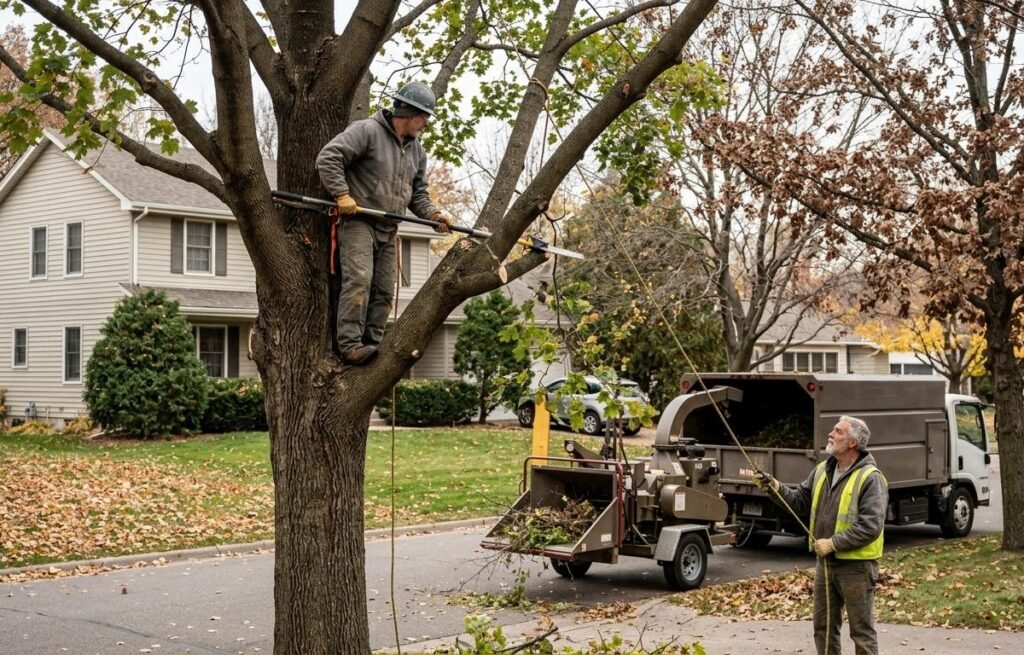
The best time of year to trim maple trees in the Twin Cities is the dormant window, late winter to early spring, just before the buds open. Early to mid-summer, once the leaves have fully expanded, is the main alternative. The one season to skip is fall. Dead, broken or hazardous limbs can come out in any month. Metro Tree & Crane trims maples across Blaine, Coon Rapids and the north metro year-round, and we schedule each job around the season, the species and what the tree actually needs.
Top Seasons to Trim Maple Trees, Ranked
Experts disagree on this one, so here is how the options stack up for a typical Minnesota maple.
- Late winter to early spring (the dormant window). This is the most common expert recommendation. Most guidance says pruning maples is best done in late winter or early spring. With no leaves in the way, the branch structure is easy to read. Cuts heal fast once growth starts. And frozen ground protects your lawn from equipment. For our area, late February through early March is a practical target.
- Early to mid-summer, after leaf-out. University extension answers favor this window. One notes that maples can be safely pruned in early summer after the leaves have leafed out or turned dark green. Summer cuts don’t bleed the way late-winter cuts do, so it’s the tidier choice.
- Any time, for dead or damaged wood. Maples may be pruned at any time of the year if the focus is on branches that are dead, dying, damaged, or diseased. A cracked limb hanging over your roof won’t wait for the calendar.
- Fall: avoid. Pruning in fall can stimulate new growth that won’t have time to harden before winter. Minnesota tree care guidance generally says to avoid significant pruning from September through November.
The sources don’t agree on a single winner, and we’d rather tell you that than pretend otherwise. For most homeowners, the dormant window is the default. Summer is the pick if sap mess bothers you.
Sap Bleeding vs. Dormant-Season Pruning
Maples are famous for sap, and that’s the central trade-off. A maple pruned in late winter or early spring will "bleed" from the cuts, because that period overlaps with the natural sap run. The flow looks alarming, but the volume lost from pruning doesn’t harm the tree. It is unsightly, though, and it can drip onto cars, patios and walkways.
The bleeding stops on its own. The sap run winds down once temperatures stay above freezing and the buds begin to open. So the very late end of the dormant window, or a cold stretch in February before the first real thaw, produces less drip than a mid-March warm spell.
So which should you choose? If you want the clearest view of the branch structure, quick wound response and easy ground access, prune in the dormant season and accept some sap. If a clean look matters more than anything, wait for summer. If a limb is a hazard in the dead of winter, cut it then. Sap loss is cosmetic. A hazardous limb is not.
For a broader look at how timing fits into overall tree care, see our overview of tree trimming and pruning.
Minnesota Timing: Dormant Window, Oak and Elm Rules
Twin Cities properties sit in USDA hardiness zones 4b to 5a: long, hard winters and a short growing season. Local tree care guidance generally defines the dormant pruning window for deciduous trees as late November through March, with late February through early March often called optimal. That’s contractor guidance rather than an official rule, but it matches how the season actually behaves here.
Maples aren’t the species Minnesota restricts by law-like timing rules. Oaks and elms are. Many north metro yards hold a mix of species, so the schedule has to account for all of them:
- Oaks: The Minnesota DNR and University of Minnesota Extension advise against pruning oaks from April through July, when beetle activity and fungal spore production overlap and oak wilt can spread through fresh wounds.
- Elms: Avoid pruning from April through August, when elm bark beetles are most active.
If your maple stands next to an oak or elm, don’t assume one visit covers everything. We plan the work so the maple gets trimmed in its best window while the oaks and elms stay on their safe schedule. For local work, our crews handle tree trimming in Coon Rapids and tree trimming and pruning in Blaine with these species rules in mind.
When to Avoid Pruning and When Dead Wood Can Go Anytime
The clearest "don’t" is fall. Late-season cuts can push tender new growth that frost then kills, and trees heading into dormancy have fewer resources to seal wounds. September through November is the period to leave alone unless safety forces your hand.
Spring leaf-out is the other awkward moment. Right as buds break, the tree is spending stored energy on new leaves, and heavy cuts at that point add stress. Light shaping is fine. Save major structural work for the dormant window, or for summer after the foliage hardens.
The exceptions matter just as much. Dead, dying, diseased or storm-damaged wood can be removed in any month. Hanging branches, cracked limbs and deadwood overhead are safety problems, not scheduling problems. In winter, dead wood is easier to spot because it’s the part that never leafs out or carries frozen sap, though a tree professional can confirm what’s truly dead.
Younger trees follow a gentler rule. Extension guidance advises that maples shouldn’t be pruned before they’re about three years old, since young saplings are soft and easy to damage. Let a new tree establish before you start shaping it.
If you’re weighing whether a problem tree needs trimming or removal altogether, our guide to tree removal cost explains what drives the price.
Canopy Limits, Young Trees, and Storm Damage Help from Metro Tree & Crane
Timing is only half of good maple pruning. The other half is how much you take. The standard rule is to never remove more than a quarter of the living canopy in one season. Taking more strips the tree of the leaf area it uses to make food, and that invites stress, weak regrowth and decline. If a maple needs more reduction than that, spread it across two or three seasons.
Good cuts matter as much as good timing. We prune back to the branch collar, remove crossing and rubbing limbs, and thin for light and airflow. We don’t "top" trees. Topping damages maples badly and creates weak, fast-growing sprouts.
Metro Tree & Crane is licensed and insured, with 30+ years of experience serving the Twin Cities north metro. We provide free estimates, and our team can tell you quickly whether your maple needs a light trim now, a structural prune next winter or removal. For large or hard-to-reach maples, crane-assisted tree service in Blaine lets us take limbs out in controlled sections over houses, fences and driveways.
Storms don’t follow a pruning calendar. If wind, ice or heavy snow has split a maple or dropped a limb on your property, call us right away. We respond 24/7 through our emergency tree service in Blaine and across Coon Rapids. For a full list of what we handle, see our services page.
FAQ
What’s the best time of year to trim maple trees?
For most Twin Cities maples, the best time is the dormant window from late winter to early spring, just before bud break. Early to mid-summer, after leaves harden, is a good alternative if you want to avoid sap bleeding. Skip fall, and remove dead or hazardous limbs whenever they appear.
Will pruning a maple in winter hurt the tree from sap bleeding?
No. Sap loss from pruning cuts looks messy, but the amount doesn’t harm the tree. The bleeding stops once the sap run ends and the buds open. If the drip bothers you, schedule the work for summer instead.
How much of a maple can I trim at once?
Remove no more than about a quarter of the living canopy in a single season. If the tree needs more reduction, split it across multiple seasons. Also hold off on pruning very young maples until they’re around three years old.